2011 Parish Bulletins


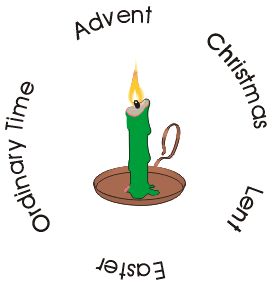
The Liturgical Yearliturgical-year-adobe-ordin

Unlike pagan religions which see time as an endless cycle, Christians see time as being linear; it has a beginning and will have an end. Within Christianity's linear, "big picture" sense of time, though, the passing of hours is experienced as cycles of meditations on holy things. Think of a spiral -- of a circle of time moving ever forward toward His Coming -- and you will have a sense of "Catholic time." The Catholic year (the "liturgical year") is made special by cycles of celebrations commemorating the lives of Jesus and His mother, the angels, and the legion of Saints who modelled lives of sanctity. Every single year, aware Catholics "re-live" the Gospel, from Christ's Incarnation and Birth to His Ascension and Heavenly reign. In Spring He enters the world by coming to rest in Mary's immaculate womb; nine months later, in Winter, He is born, circumcized, and given a Name. He is raised in the Holy Family, and meets His cousin, John. He goes into the Desert and we go with Him during our Lenten Season. Then follow His Passion and Agony, which are soon vanquished by His Resurrection, His Ascension, and the Pentecost. Now He reigns -- and forever, and we await His Second Coming as we prepare to celebrate again His First Coming. Then the cycle begins again, like a wheel that's been spinning for two millennia. The Catholic who is aware of this wheel is necessarily aware of Christ; the Catholic who also celebrates the Feasts well and practices the traditions of the Church lives intimately with Him.

All of the Church's Feasts1 fall into one of the 2 main "liturgical cycles" made of 7 "liturgical seasons." Each of the Seasons has an associated mood, its own "feeling in the air," its own scents and ornaments. There is even for each Season an associated color which will be reflected in the priests' vestments and liturgical art, church decoration, and so on (though on certain Holy Days within a particular season, that Day's color will take precedence over the season's color). There is a definite rhythm to Catholic life. See more by clicking here

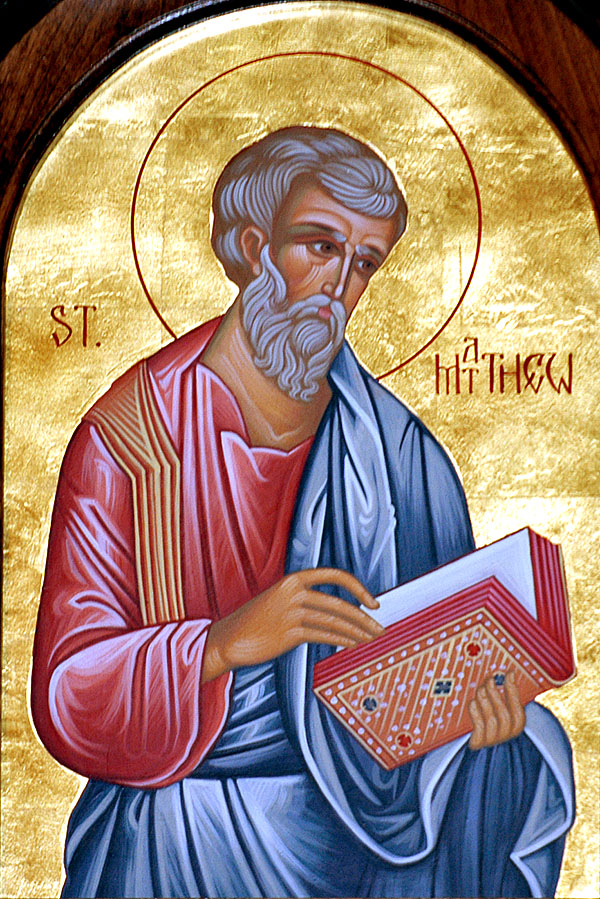
stmatthew2Saint Matthew's Gospel: Year A;

The start of a new liturgical year, beginning with the first Sunday of Advent, also marks the transition from one lectionary cycle (A, B, or C) to the next. These cycles are a result of the Second Vatican Council, which ordered a change in the Sunday readings at Mass so that Catholics would become more familiar with the text of the Bible. As a result we now have a three-year cycle of readings built around readings from the three synoptic Gospels - Matthew, Mark, and Luke. The Gospel of Matthew will be read throughout 2011.

Download our Current Bulletin (PDF Format) by clicking here

Download @adobe' Software by clicking here "PDF" (Portable Document Format) is Adobe(R) Acrobat(R) format. PDF is a proprietary format that allows you to read electronic documents, either on or off line. This format provides a page-by-page view of documents, exactly as they appear in their printed form, as well as allowing keyword search. Adobe provides a free Acrobat Reader that allows you to view, navigate, and print PDF files across all major computing platforms. It is the free viewing companion to Adobe Acrobat and to Acrobat Capture(R) software. If you do not already have it, you may use the link at left to download the FREE Adobe Acrobat reader, which you may then install and use to access PDF documents on this site.

Previous Bulletins

16th Sunday in Ordinary Time 17th July
1st Sunday of Advent

28th November 2010
2nd Sunday of Advent

5th December 2010

Feast of the Immaculate Conception
8th December 2010

3rd Sunday of Advent
12th December 2010
4th Sunday of Advent
19th December 2010

Feast of the Holy Family of Jesus, Mary & Joseph
26th December 2010

2nd Sunday after Christmas
2nd January 2011

Feast of the Epiphany
6th January 2011

Feast of the Baptism of the Lord
9th January 2011

Second Sunday of Ordinary Time
16th January

Fourth Sunday of Ordinary Time
30th January
Fifth Sunday of Ordinary Time
6th February
Sixth Sunday of Ordinary Time
13th February
Seventh Sunday of Ordinary Time
20th February
Eighth Sunday of Ordinary Time
27th February
First Sunday
of Lent
13th March

Saint
Patrick's Day
17th March

Second Sunday
of Lent
20th March
Third Sunday of Lent
27th March

Fourth Sunday of Lent
3rd April

Palm Sunday
17th April
Easter Sunday
24th April
2nd Sunday of Easter
Divine Mercy Sunday
1st May

3rd Sunday of Easter
8th May

4th Sunday of Easter
15th May
6th Sunday
of Easter
29th May
7th Sunday of Easter
The Ascension of Our Lord
Pentecost Sunday
12th June 2011
The Most Holy Trinity Sunday 19th June 2011
Feast of Corpus Christi 26th June 2011

15th Sunday in Ordinary Time 10th July

16th Sunday in Ordinary Time 17th July

17th Sunday in Ordinary Time 24th July

18th Sunday in Ordinary Time 31st July 2011

19th Sunday in Ordinary Time 7th August 2011

20th Sunday in Ordinary Time 14th August 2011

21st Sunday in Ordinary Time 21st August 2011

22nd Sunday in Ordinary Time 28th August 2011

23rd Sunday in ordinary Time 4th September 2011

24th Sunday in Ordinary Time 11th September 2011

25th Sunday in Ordinary Time 18th September 2011

26th Sunday in Ordinary Time 25th September 2011

27th Sunday in Ordinary Time 2nd October 2011

28th Sunday in ordinary Time 9th October 2011

29th Sunday in Ordinary Time 16th October 2011

31st Sunday in Ordinary Time 30th October 2011

32nd Sunday in Ordinary Time 6th November 2011

33rd Sunday in Ordinary Time 13th November 2011 20th November 2011 Feast of Christ the King 27th November 2011 First Sunday of Advent

Sunday 4th December 2011 second Sunday of Advent

Sunday 11th December 2011 third Sunday of Advent Sunday 18th December 2011 Fourth Sunday of Advent Sunday 5th February Fifth Sunday of Advent